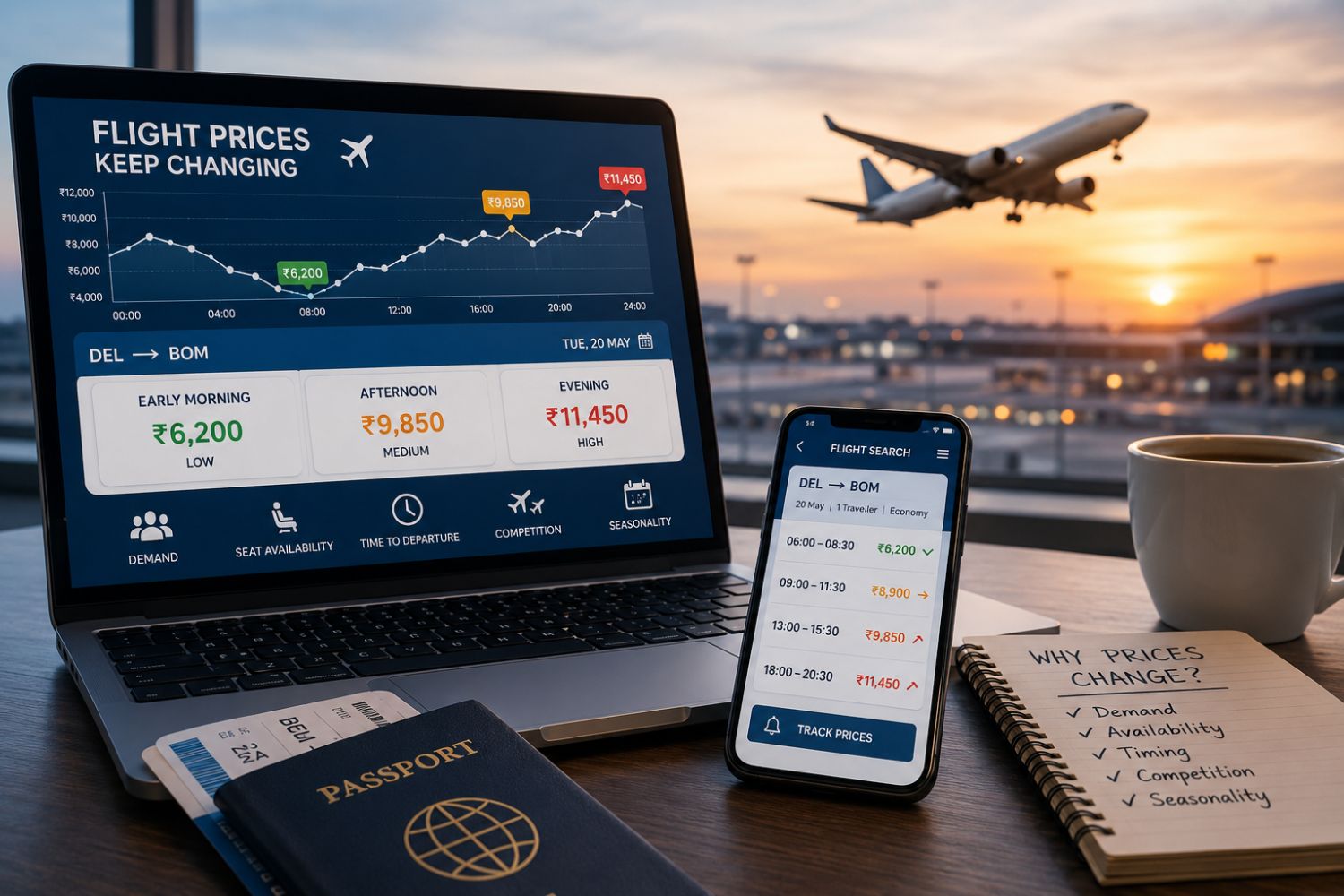
Do flight prices change daily?
Indeed, prices of flight tickets tend to change daily, but not only that. Actually, fares can change more frequently than once every day. Airlines use constantly updated information and real-time data when setting prices, which means a flight ticket can be very expensive in the morning but much cheaper in the evening.
Therefore, many individuals seek answers to : do flight prices change daily? Indeed, the answer is definitely yes. Moreover, the price can change hourly. It depends on how many passengers search for particular flights, how many vacant places there are in the plane, and how close the flight is scheduled.
How Often Are Flight Prices Changing?
Many people ask : how often do flight prices change? The answer is every minute.
Airlines use automated pricing systems that monitor :
- Booking patterns
- Seat availability
- Competitor pricing
- Seasonal demand
- Historical trends
These systems can update fares in real time, which is why prices can rise or fall within minutes. This dynamic pricing model ensures airlines maximise revenue while still filling seats efficiently.
Why Do Flight Prices Change?
At the core of it, why do flight prices change comes down to supply and demand. Here are the main factors influencing price fluctuations :
1. Demand for Seats
When more people are searching or booking a particular route, prices go up. High demand, especially during holidays or weekends, drives fares higher.
2. Seat Availability
As seats fill up, airlines increase prices. The fewer seats left, the higher the fare tends to be.
3. Time Before Departure
Prices typically rise as the departure date approaches. Airlines know last-minute travellers are often willing to pay more.
4. Competition
If competing airlines lower their prices, others may follow to stay competitive. This is why fares can drop suddenly.
5. Seasonality
Peak travel seasons like summer, festivals, and year-end holidays usually see higher prices due to increased demand.
All these factors combined explain why do flight prices change so much; it’s a constantly shifting balance between supply, demand, and market competition
When Do Flight Prices Change?
On the other hand, if you are planning to book a flight based on its pricing timeline, you may wonder when prices will change. It turns out that there is no definite timeline. Nonetheless, there are some common times when flight prices tend to change :
- During non-peak hours (such as late at night or early in the morning)
- At the beginning of the week
- When competitors change their prices at any point in time
As a result, flight prices have the potential to change at any given moment.
Can Flights Be Cheaper at Night?
A widely-held theory suggests that booking during night-time allows passengers to obtain a better deal on their flights. Many people seek an answer to the question: Do flight prices go down at night?
The answer to this is : not necessarily; sometimes they do, but not all the time.
In some cases, booking late at night leads to a discount since fewer people are online at this time. This is because airlines usually change their inventory at such times, resulting in a lower cost per flight ticket. Again, this cannot be used as an absolute guideline for obtaining cheaper flights.
When Do Flight Prices Drop?
Another key question is : when do flight prices drop? While there’s no universal answer, price drops are more likely to happen under certain conditions :
- When airlines release new deals or promotions
- When competitors lower fares
- During low-demand travel periods
- When flights aren’t filling up as expected
Midweek, especially Tuesdays and Wednesdays, is often associated with price adjustments, but again, this is not a strict rule in today’s algorithm-driven pricing systems.
Why Prices Seem So Unpredictable?
The biggest reason travellers feel frustrated is the lack of transparency. Unlike traditional pricing models, airline fares are not static. They are influenced by data you can’t always see, like how many people are viewing the same flight or how quickly seats are selling. This creates the impression that prices are random, when in reality, they are highly calculated.
Smart Strategies to Deal with Price Changes
While you can’t control airline pricing, you can adapt your strategy :
- Book in advance with in the recommended window
- Be flexible with dates and times
- Avoid peak travel days like weekends
- Track fares over time before booking
- Book when you see a good deal instead of waiting too long
Understanding how often do flight prices change helps you act quickly when you find a reasonable fare.
Making Flight Booking Smarter and Stress-Free with AirBedder
Keeping up with constantly changing flight prices can be exhausting. Checking multiple websites, tracking fare drops, and trying to guess the right time to book often turns into a time-consuming process. This is where Airbedder makes things much simpler.
Instead of manually comparing prices across different platforms, Airbedder brings everything together in one place. It allows you to quickly see how fares are changing across airlines and dates, helping you identify the best options without the usual confusion. Whether you’re trying to figure out when do flight prices drop, our platform gives you a clearer picture of what’s happening.
What really makes a difference is the ease of use. You don’t need to constantly monitor prices or second-guess your decisions. With real-time comparisons and a clean interface, Airbedder helps you move from searching to booking with confidence. It takes away the stress of fluctuating prices and lets you focus on planning your trip instead.
Final Thoughts
Flight prices change because the airline industry is built on dynamic pricing. From demand and competition to timing and availability, multiple factors influence fares every minute. The key takeaway is this: flexibility and awareness are your biggest advantages. By understanding how pricing works and using the right tools, you can make smarter decisions and avoid overpaying for your next flight.